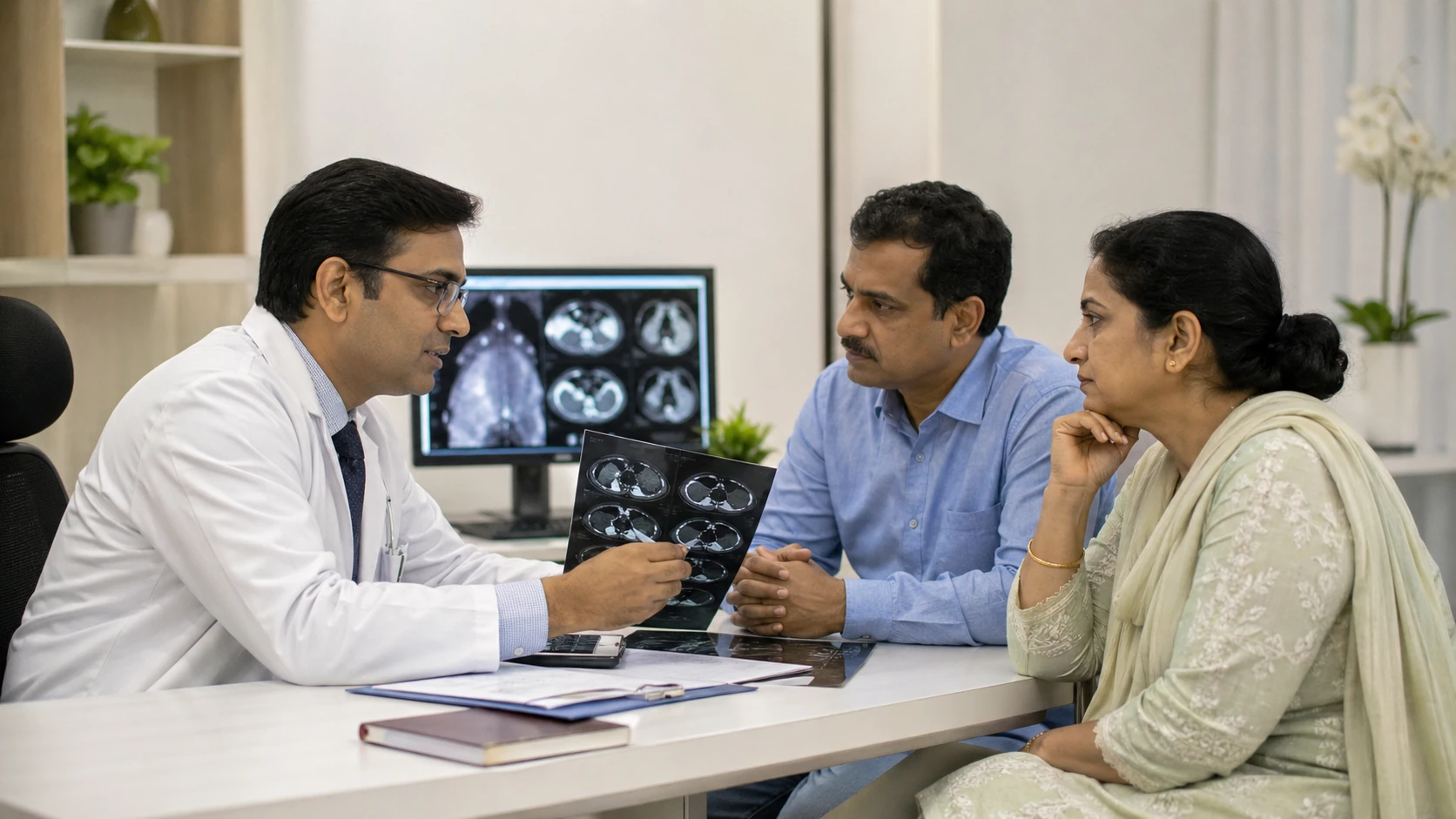
A cancer second opinion can help you understand diagnosis, staging, treatment choices, surgery, radiation, chemotherapy, side effects, and follow-up. Online review can be useful when complete reports are available.
When to consider a cancer second opinion
A second opinion may help when treatment options are complex, surgery or radiation is being considered, chemotherapy has been advised, reports are unclear, or you want more confidence before starting treatment.
What an online second opinion may review
An oncologist may review biopsy reports, scan reports, stage, previous treatment, operation notes, chemotherapy records, radiation records, current symptoms, general health, and the treatment plan already suggested.
Reports to keep ready
Keep pathology and biopsy reports, PET-CT, CT, MRI, ultrasound or mammogram reports, scan images or discs if available, discharge summaries, operation notes, chemotherapy or radiation records, and current medicines.
When cancer symptoms need urgent care
Seek urgent care for fever during chemotherapy, severe breathlessness, uncontrolled pain, heavy bleeding, confusion, repeated vomiting, sudden weakness, dehydration, or rapidly worsening symptoms.
Frequently asked questions
Can I get a cancer second opinion online in India?
Yes, online second opinions can help when complete reports are available. Some decisions may still require in-person examination, tumor board review, or hospital-based evaluation.
Which oncologist should give the second opinion?
It depends on the treatment question. Surgical oncology, radiation oncology, and medical oncology may all be relevant depending on the cancer type and proposed treatment.
Should I tell my treating doctor about a second opinion?
It is usually helpful because your treating doctor can share records and explain the current plan. A second opinion is a common way to understand options more clearly.
Prepare for a cancer second opinion
Gather your biopsy, scan, and treatment records, then book an online oncology consultation for review.