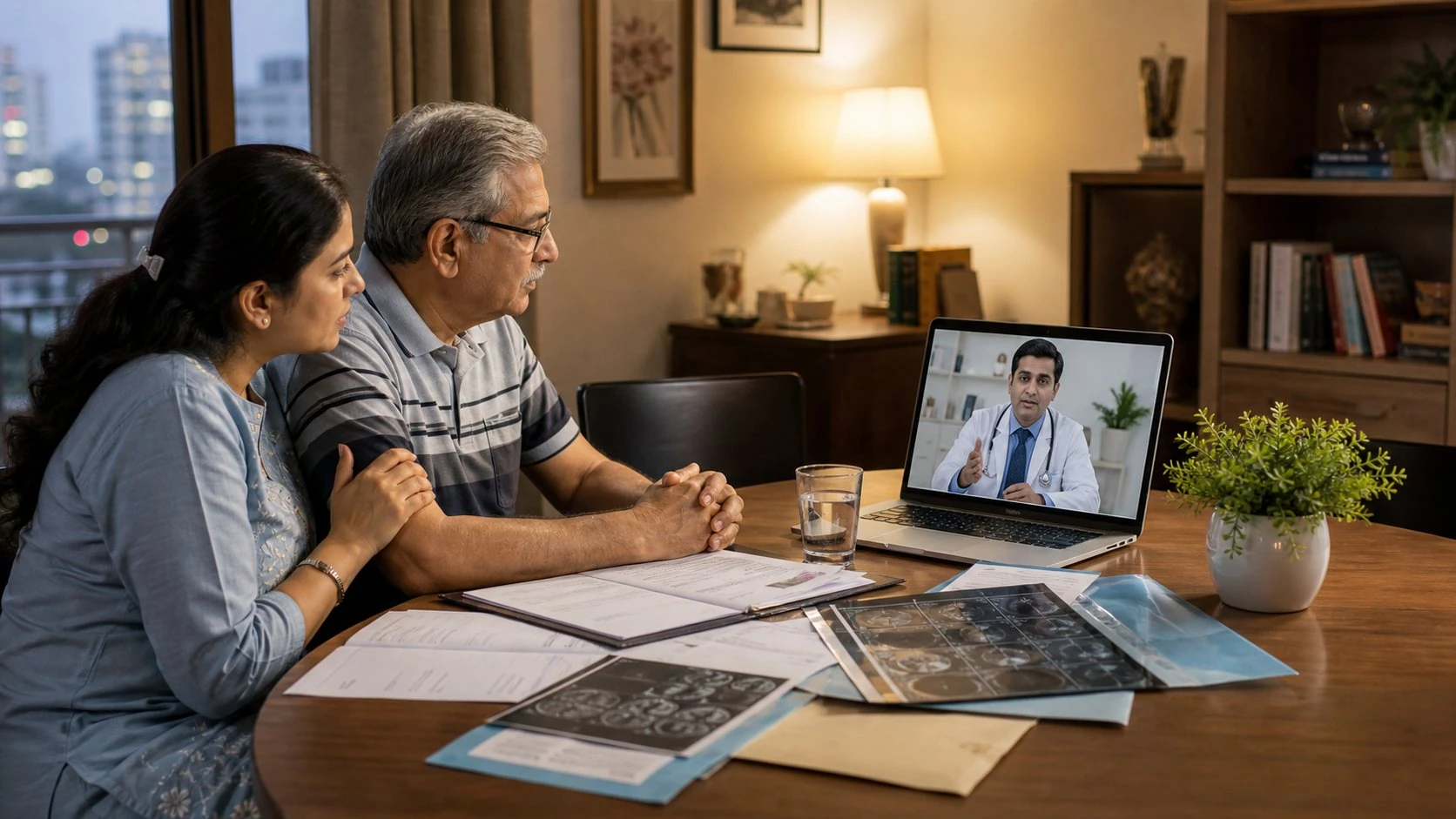
Chennai has strong specialist care, but patients still need help deciding which report, procedure, or follow-up step deserves priority. Chennai combines dense residential neighborhoods, long arterial roads, IT corridors, tertiary hospitals, and traffic pressure that can turn even a routine clinic visit into a half-day plan. This guide is written for families, office commuters, students, and older adults managing care around Chennai traffic. It explains where online consultation can help, what to prepare before speaking with a doctor, and when symptoms should move quickly to in-person or urgent care. The goal is not to replace examination when it matters; it is to make the first decision clearer.
5-7 minute read
Second opinions before another hospital visit
When a scan, biopsy, discharge summary, or long treatment plan is already in hand, the next useful step may be a structured review rather than another rushed waiting-room conversation. Online second opinions can help Chennai families prepare better questions before visiting a hospital or specialist in person.
People often need a first medical opinion before deciding whether to travel across the city, wait near a hospital, or take time off from work or caregiving. This is where a focused online consultation can be useful: it gives the patient a chance to explain the concern, share records, and understand what kind of care is reasonable before rearranging the day. For people around T. Nagar, Anna Nagar, Velachery, OMR, Tambaram, Porur, and Ambattur, that first conversation can reduce guesswork without pretending that every problem can be solved remotely.
Where AskyDoc fits into the care journey
AskyDoc is most useful when the patient needs a structured medical conversation: video or phone consultation for symptoms, chat for clarifying instructions, prescription support when the doctor considers it appropriate, and report sharing when the concern depends on lab values, scans, discharge notes, or photos. For Chennai, this can make routine and follow-up care easier to start from home.
The strongest use cases for this page include cancer reports, surgery advice, pregnancy concerns, heart investigations, kidney reports, diabetes complications, and complex treatment plans. A doctor can help decide whether the next step is home care, a local clinic visit, specialist consultation, testing, or urgent evaluation. That decision-making role is important because online care should make access easier, not make patients casual about risk.
What to prepare before the consultation
A 5-minute preparation step often makes the consultation more useful. Keep discharge summaries, scan reports, lab values, biopsy reports, current medicines, previous opinions, and the decision you are trying to make ready before you start. If the consultation is for a child, older adult, pregnant patient, or someone with diabetes, blood pressure, kidney disease, heart disease, asthma, or cancer history, include that context early.
It also helps to write the main question in one sentence. For example: should this symptom be watched, should a test be done, should a specialist be seen, or is urgent care needed? Clear questions help the doctor guide the conversation instead of spending the appointment reconstructing the story.
When online care is enough and when it is not
Online care can be enough for many stable concerns, follow-up questions, medicine discussions, lifestyle advice, report explanation, and early triage. It is not enough when the doctor needs to examine the patient, perform a procedure, monitor oxygen or vitals closely, give emergency treatment, or arrange immediate hospital care.
Seek urgent in-person care for new weakness, severe pain, uncontrolled fever, bleeding, breathlessness, severe dehydration, or any post-procedure complication. If symptoms feel dangerous, sudden, or rapidly worsening, do not wait for an online appointment. Use online consultation for clarity and access when the situation is stable enough for a conversation.
How to use this guide for a better appointment
Use this page as a checklist before booking. Decide who should speak during the call, collect the reports, keep the patient nearby if possible, and make sure the internet connection is stable. In Chennai, many families use consultation time to decide whether care can stay local, whether travel should be planned, or whether a specialist opinion is worth arranging.
After the consultation, save the advice, note the warning signs, and ask when follow-up is needed. A good online visit should leave you with a practical next step, not just a temporary answer.
Questions to ask before you end the call
Before the consultation ends, ask the doctor to repeat the working impression, the immediate next step, and the warning signs that should change the plan. Ask whether the information you shared is enough or whether a physical examination, test, scan, or specialist visit is needed. If medicines are discussed, confirm dose timing, duration, side effects to watch for, and whether follow-up is needed.
For patients in Chennai, it also helps to ask how quickly the next step should happen. That one answer can decide whether you can monitor at home, book a planned clinic visit, arrange travel with family, or seek urgent care the same day. If Tamil-speaking comfort matters, mention it clearly so the care conversation stays easy to follow.
Frequently asked questions
Can I use AskyDoc for online specialist second opinion in chennai?
Yes, when the concern is stable enough for a medical conversation. You can use AskyDoc to discuss symptoms, share reports, ask follow-up questions, and understand whether video, phone, chat, or in-person care is the safer next step.
Will online consultation replace a clinic visit in Chennai?
Not always. Online consultation is useful for triage, routine guidance, report review, and follow-up. If examination, testing, procedure, or urgent treatment is needed, the doctor may advise in-person care.
What should I keep ready before booking?
Keep prescriptions, recent reports, symptom notes, home readings if available, allergy details, and current medicines ready. If the issue is visible, clear photos in good light can help the doctor understand it better.
Can I ask for a Tamil-speaking doctor?
You can mention Tamil-speaking comfort while booking or during the care journey. Language comfort matters because patients explain symptoms better when the conversation feels natural.
When should I avoid online consultation and seek urgent care?
Choose urgent in-person care for severe, sudden, or rapidly worsening symptoms, especially chest pain, breathing difficulty, fainting, stroke-like symptoms, heavy bleeding, major injury, confusion, or severe dehydration.
Start with a clearer care decision
Use AskyDoc to discuss the concern, share reports, and decide whether video, phone, chat, or in-person care is the safest next step for your situation.