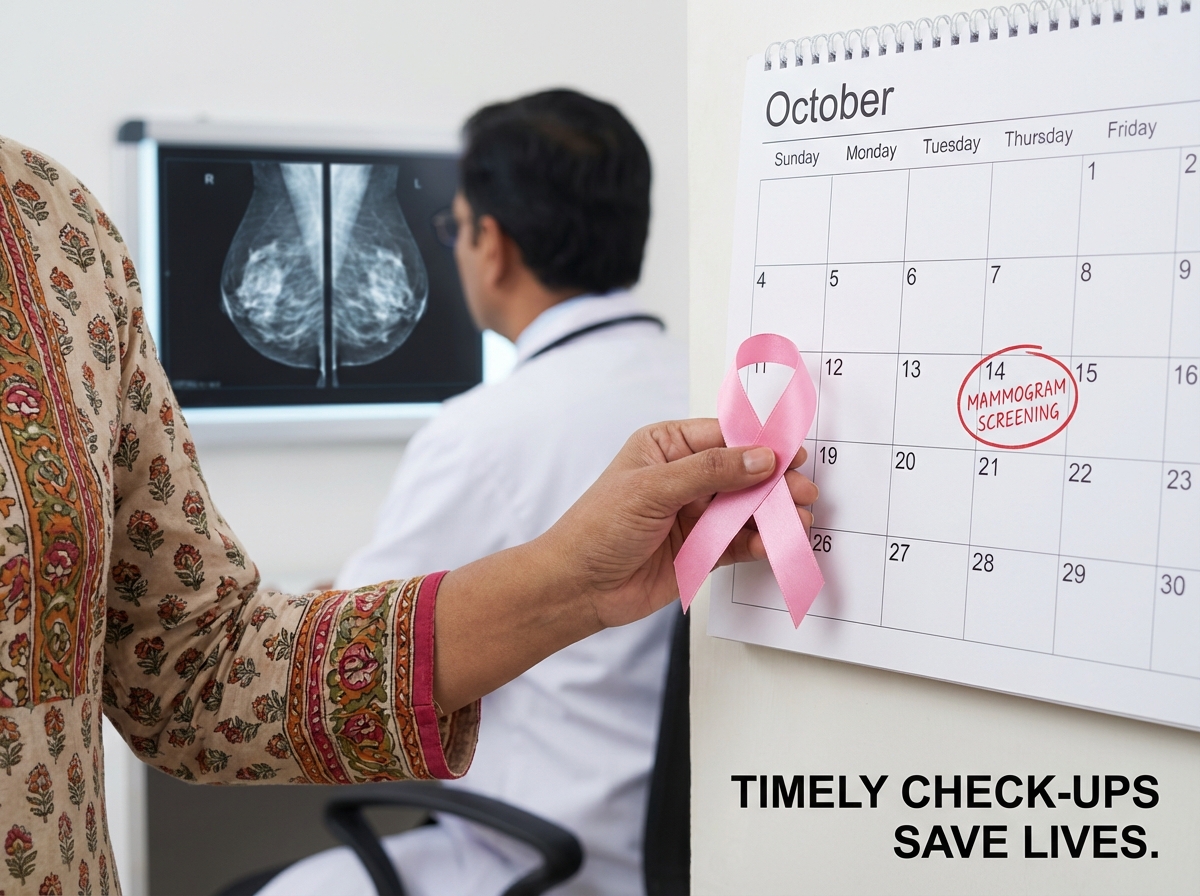
Breast Cancer: Early Detection Saves Lives in India
Early breast cancer detection can improve treatment outcomes and survival. Learn warning signs, screening habits, and when to seek medical advice in India.
Direct answer: Early detection of breast cancer can improve treatment outcomes, increase the chance of less aggressive care, and may improve survival. In India, timely screening, awareness of symptoms, and early medical advice are especially important because many cases are still diagnosed late.
Key takeaways
- Breast cancer may not cause pain or obvious symptoms in its early stages.
- Early detection can improve survival and may allow less aggressive treatment.
- Important warning signs include a new lump, skin changes, nipple discharge, or a change in breast shape.
- For many women, yearly clinical breast exams and mammograms after age 40 are advised.
- Women with a family history or other high-risk factors may need earlier screening based on a doctor’s advice.
- If you notice any unusual breast change, consult a qualified clinician promptly.
Why early breast cancer detection matters in India
Breast cancer is a condition in which cells in the breast grow abnormally. When it is found early, treatment may start before the disease advances.
For women in India, this is an important public health message. Many cases are still diagnosed late because early signs are ignored, misunderstood, or dismissed as minor.
In India, the overall 5-year survival rate for breast cancer is around 66%. If it is detected at the earliest stage, survival can rise to nearly 95%.
That difference highlights why regular screening, body awareness, and timely medical attention matter, especially for women after 40 or earlier in high-risk cases.
Why early diagnosis of breast cancer is important
Breast cancer often begins silently. In early stages, it may not cause pain or obvious discomfort, which is why screening matters.
A small lump or subtle tissue change may be easier to treat before the disease spreads.
How early diagnosis may help
- Better survival chances: Treatment can begin before the cancer advances.
- Less aggressive treatment: Some women may have a higher chance of breast-conserving approaches.
- Lower emotional and financial burden: Earlier care may reduce stress and disruption for the patient and family.
In many Indian families, women often delay their own check-ups while caring for others. That delay can make treatment more difficult.
Common breast cancer warning signs you should not ignore
Not every breast change means cancer, but every unusual change deserves attention. If something feels or looks different, get it checked by a qualified doctor.
Possible signs to watch for
- A new lump in the breast or armpit
- Changes in breast size or shape
- Skin changes such as dimpling, redness, thickening, or puckering
- Nipple discharge, especially if it is bloody or unusual
- Nipple pulling inward or any sudden visible change
- Persistent pain in one area that does not go away
One common mistake is waiting for pain. Breast cancer does not always hurt in the beginning, so a painless lump should never be ignored.
Breast cancer screening habits that may help protect your health
Screening means checking for disease before obvious symptoms appear. Health experts recommend regular breast screening as part of preventive care.
For most women, yearly clinical breast exams and mammograms after age 40 are advised. Women with a family history of breast cancer or other high-risk factors may need to begin earlier, based on a doctor’s recommendation.
Simple screening habits to follow
- Schedule routine breast check-ups every year.
- Ask your doctor when you should start mammography.
- Learn how your breasts normally look and feel.
- Do not delay a consultation if you notice a new symptom.
Awareness campaigns across India are helping more women understand self-examination and regular screening. The more openly breast health is discussed, the more likely people may be to seek help earlier.
What Indian women should remember about breast cancer screening
The key message is simple: early detection gives you options. It can improve survival, reduce treatment complexity, and in some cases help preserve the breast.
If you notice a lump, nipple discharge, skin changes, or anything unusual, do not wait too long. Speak with a qualified doctor and get clarity as early as possible.
If it is time for routine screening, make the appointment now rather than delaying it.
Medical safety note: This information is for awareness and does not replace medical advice. Consult a qualified clinician for diagnosis, screening schedules, or treatment decisions.
If you want expert guidance, screening advice, or help connecting with the right specialist, book an appointment through AskyDoc.