10 Indian Foods for Better Heart Health Daily
A simple Indian heart-healthy diet can include whole grains, greens, nuts, legumes, fish, and smart daily habits that support cardiac health.
Direct answer: A heart-healthy Indian diet can be built from familiar foods such as whole grains, leafy greens, legumes, nuts, fish, and balanced cooking oils. The most effective approach is to make simple, consistent daily choices rather than follow extreme diet rules.
Key Takeaways
- Many heart-healthy foods are already common in Indian kitchens.
- Whole grains, greens, legumes, nuts, and fish can support daily cardiac care.
- Small swaps, such as reducing refined carbohydrates and fried snacks, can help over time.
- Limiting salt and sugar matters as much as adding healthy foods.
- If you have high blood pressure, diabetes, or high cholesterol, personalised medical advice is important.
Why heart diet matters in India
Heart disease is becoming more common in India due to stress, sedentary lifestyles, high salt intake, and processed food habits. That is why building a healthy heart diet into everyday meals matters.
You do not need fancy imported ingredients. Simple swaps like choosing whole grains over refined carbohydrates, adding greens to lunch, or snacking on nuts can make a real difference over time.
10 heart-healthy foods to include in an Indian diet
1. Whole grains for better cholesterol control
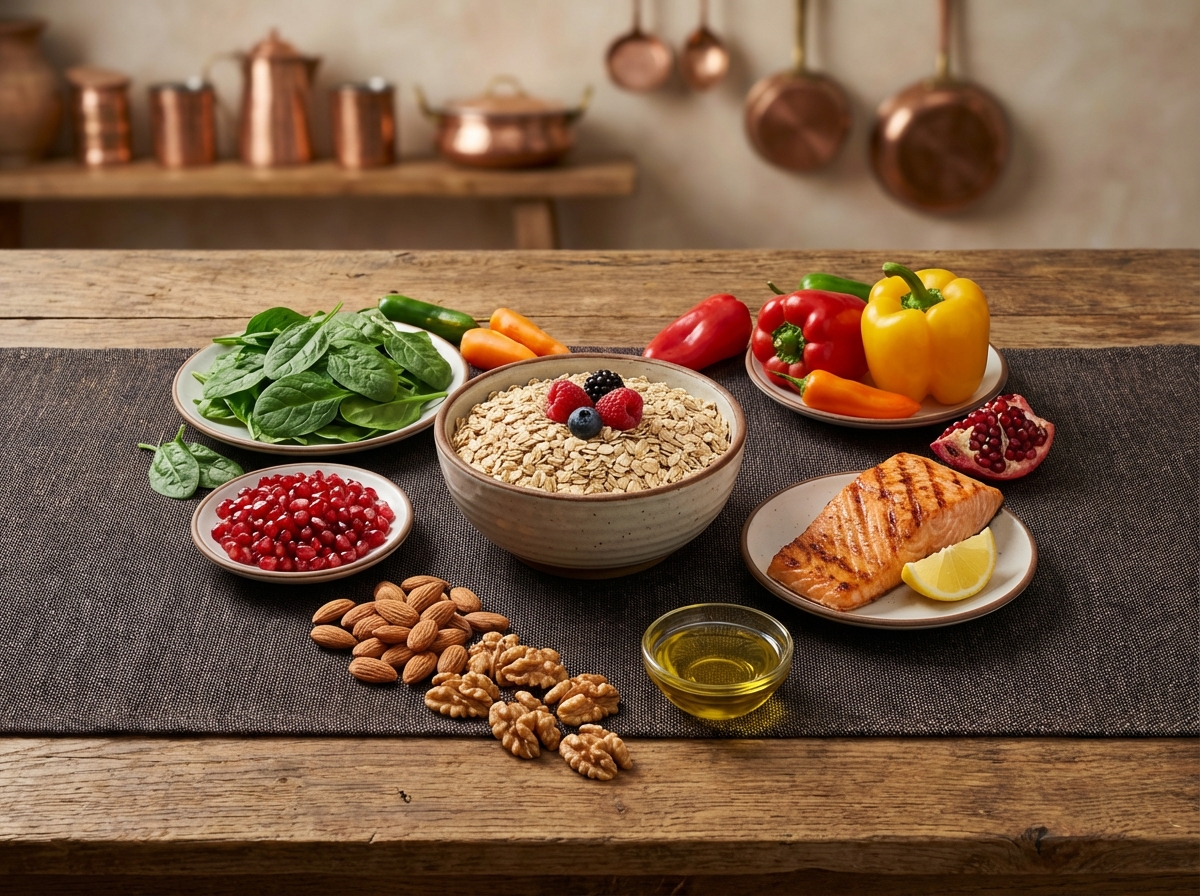
Whole grains like oats, brown rice, and millets such as bajra, jowar, and ragi are rich in fibre. Fibre helps reduce low-density lipoprotein (LDL), often called “bad” cholesterol, and also supports digestion.
Easy ways to use them:
- Oats for breakfast
- Brown rice with dal
- Jowar or bajra roti for lunch or dinner
Why they may help: Whole grains slow sugar absorption, improve fullness, and support weight management, which is important for heart health.
2. Leafy greens that support blood vessel health
Spinach, methi, and sarson are packed with iron, antioxidants, vitamins, and nitrates that help blood vessel function. They are affordable, familiar, and easy to include in Indian cooking.
Add them to:
- Thepla or paratha dough
- Dal and sabzi
- Soups and smoothies
3. Berries for antioxidant protection
Strawberries, blueberries, and Indian jamun contain polyphenols and antioxidants that may reduce inflammation. Inflammation is one of the silent factors linked with long-term heart damage.
If berries are not available daily, seasonal fruits with deep natural colour can still be a smart addition to your diet.
4. Nuts as a smart daily snack for heart health
Almonds and walnuts offer healthy fats, omega-3 fatty acids, magnesium, and plant compounds that support cholesterol balance. A small handful a day is enough.
More is not always better, especially if you are watching calories.
Replace fried namkeen with:
- 5 to 6 almonds
- 2 to 4 walnut halves
- Unsalted mixed nuts
5. Fatty fish for omega-3 benefits
If you eat non-vegetarian food, fish like salmon, mackerel, and Rohu can be excellent for your heart. They are rich in omega-3 fatty acids, which help reduce triglycerides and support healthy blood vessels.
Try grilled, steamed, or lightly curried fish instead of deep-fried versions.
6. Legumes that support heart health and blood sugar balance
Dal, rajma, and chana are classic Indian staples and deserve a place in every healthy heart diet. They are naturally cholesterol-free and provide protein plus fibre.
This makes them helpful for:
- Improving fullness after meals
- Supporting blood sugar control
- Lowering dependence on processed foods
7. Use olive oil or mustard oil wisely
Cooking fat matters. Replacing excess butter, vanaspati, or too much ghee with olive oil or mustard oil can improve the quality of fat in your diet.
These oils contain more unsaturated fats, which are generally considered more heart-friendly. The key is moderation.
8. Garlic adds more than flavour
Garlic contains allicin, a natural compound that may modestly help with blood pressure and cholesterol. It is not a magic cure, but regular use in meals can be one small helpful step.
Fresh garlic in chutneys, tadka, and soups works well for Indian diets.
9. Dark chocolate in moderation
Dark chocolate with 70% or more cacao contains flavonoids that may support blood flow. Portion size matters, so choose a small piece and avoid options loaded with sugar.
10. Green tea for daily vascular support
Green tea contains catechins, which may help protect blood vessels. It can be a better beverage choice than sugary drinks or repeated cups of sweet chai through the day.
Quick reference: foods and simple uses
| Food group | Examples | Simple Indian use |
|---|---|---|
| Whole grains | Oats, brown rice, bajra, jowar, ragi | Breakfast oats, millet roti, brown rice with dal |
| Leafy greens | Spinach, methi, sarson | Add to sabzi, dal, dough, or soups |
| Nuts | Almonds, walnuts | Small unsalted snack instead of fried namkeen |
| Legumes | Dal, rajma, chana | Main protein source in lunch or dinner |
| Fish | Salmon, mackerel, Rohu | Grilled, steamed, or lightly curried |
3 heart-smart habits that make these foods work better
These foods are helpful, but your overall eating pattern matters more than one “superfood.”
- Limit salt: Too much sodium can push up blood pressure.
- Cut back on sugar: Sugary foods and drinks add to weight gain and metabolic stress.
- Choose consistency over extremes: Daily small habits often work better than crash diets.
How to build an Indian heart-healthy plate
A practical meal can look like this: one bowl dal or chana, one serving of sabzi with leafy greens, one millet roti or brown rice portion, salad, and a few nuts later in the day.
That approach is simple, balanced, and sustainable.
When to seek medical advice
If you already have high blood pressure (BP), diabetes, high cholesterol, chest discomfort, or a family history of heart disease, diet should be personalised. Consult a qualified clinician or registered dietitian for guidance that fits your health needs.
If you want expert advice tailored to your health, you can book an appointment through book an online doctor consultation on AskyDoc and speak with a qualified doctor without delay.