How Air Pollution in Indian Cities Affects Health
Air pollution in Indian cities can irritate the eyes, throat, and lungs, and may raise long-term health risks. Learn symptoms, risks, and precautions.
Direct answer: Air pollution in Indian cities can cause daily symptoms such as dry eyes, coughing, throat irritation, headaches, and breathlessness. Over time, repeated exposure may affect the lungs, heart, eyes, skin, and overall health, especially in children, older adults, and people with existing conditions.
At a glance
- Intended audience: Urban residents in India, parents, older adults, outdoor workers, and people with asthma, chronic obstructive pulmonary disease (COPD), sinus issues, or heart disease
- Location relevance: India-focused, especially densely populated cities such as Delhi and other metros
- Reading time: 4 minutes
Key Takeaways
- Air pollution in Indian cities may trigger cough, throat irritation, dry or burning eyes, headaches, fatigue, wheezing, and breathlessness.
- Fine particulate matter, especially PM2.5, can reach deep into the lungs and may enter the bloodstream.
- Children, older adults, pregnant women, outdoor workers, and people with asthma or heart and lung disease may face higher risks.
- Indoor air may also be affected when outdoor air quality is poor.
- Checking the Air Quality Index (AQI), using an N95 mask, and reducing exposure on high-smog days may help.
Why urban smog in Indian cities may be more dangerous than it looks
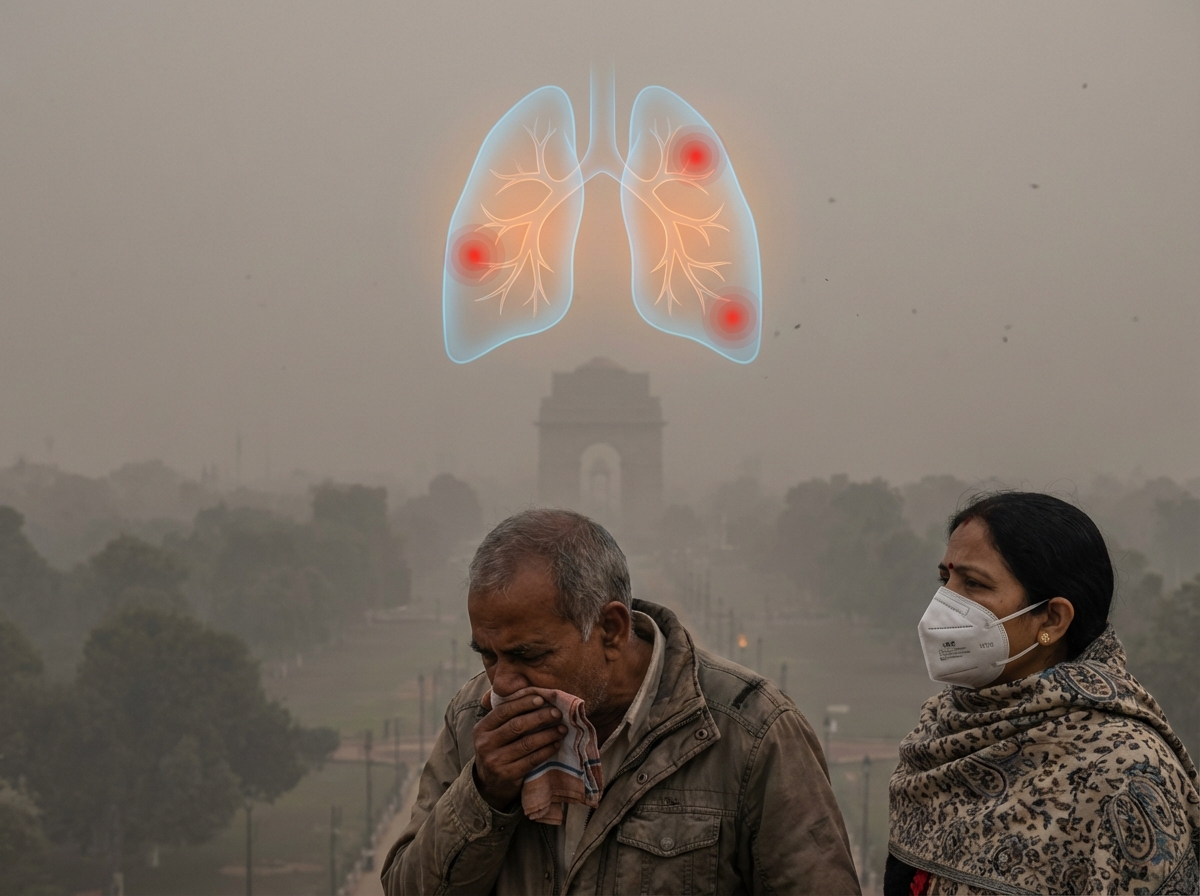
Smog contains a mix of harmful particles and gases, especially PM2.5, which means particulate matter that is 2.5 micrometres or smaller. These tiny pollutants are small enough to enter deep into the lungs and may even reach the bloodstream.
That is why exposure may do more than trigger coughing or sneezing. Over time, it may contribute to more serious health problems.
Health experts have linked prolonged exposure to polluted air with asthma, bronchitis, reduced lung function, heart disease, stroke, and lung cancer. According to the Clean Air Fund, India sees around 2.1 million premature deaths every year related to dirty air. This suggests air pollution is a major public health concern, not just a seasonal inconvenience.
Common health effects of air pollution people are noticing right now
Doctors are reporting that even otherwise healthy people living in heavily polluted Indian cities may develop symptoms during high-smog periods. These signs may seem mild at first, but repeated exposure can make them worse.
- Persistent cough and throat irritation
- Burning or dry eyes
- Headaches and fatigue
- Wheezing or shortness of breath
- Allergic flare-ups and skin irritation
Many people describe it as feeling like they are breathing in smoke every day. In some reports, heavy exposure to city pollution has been compared to smoking several cigarettes a day, even in people who have never used tobacco.
Who is most at risk from air pollution?
Children and older adults may need extra protection
Children are especially vulnerable because their lungs are still developing. Pediatricians in high-PM2.5 cities are seeing more cases of wheezing, allergic bronchitis, and breathing difficulty.
Older adults, especially those with pre-existing heart or lung disease, may experience worsening symptoms during pollution spikes.
Pregnant women, outdoor workers, and people with asthma, sinus issues, chronic obstructive pulmonary disease (COPD), or heart disease may also face higher risks. But the wider concern is simple: no one is fully immune. Even healthy adults can feel the effects after repeated exposure.
Daily precautions that may help reduce exposure
1. Air pollution affects more than the lungs
Most people connect smog with asthma or coughing, but polluted air may also increase inflammation in the body and raise the risk of heart attacks and stroke.
2. Indoor air is not always safe
If outdoor air quality is poor, indoor spaces can also collect pollutants, especially in homes near traffic-heavy roads or waste-burning areas. Closed windows alone are not always enough.
3. Practical steps for polluted days
You may not be able to control citywide pollution on your own, but you can lower your exposure with simple habits.
- Wear a N95 mask on very polluted days
- Use an air purifier indoors if possible
- Check the Air Quality Index (AQI) before outdoor exercise
- Eat antioxidant-rich foods like fruits, vegetables, nuts, and seeds
- Stay hydrated and wash your face and eyes after coming home
What needs to change at the city level to reduce air pollution?
Individual precautions matter, but they are only part of the answer. Lasting improvement depends on reducing vehicular emissions, construction dust, industrial pollution, and open burning of waste.
Cleaner transport, better enforcement, and stronger public awareness are all important. Most importantly, people should stop normalizing smog. If the air is making your family feel unwell, that is not something to simply adjust to.
When to take pollution-related symptoms seriously
If you or your child have frequent coughing, breathlessness, burning eyes, recurring throat irritation, or worsening asthma during pollution peaks, do not ignore it. Early medical advice may help prevent complications.
Safety note: This content is informational and is not a substitute for medical care. Consult a qualified clinician if symptoms are persistent, worsening, or severe.
If you are unsure whether your symptoms are related to air pollution, consider speaking with a qualified doctor through AskyDoc online doctor consultation for timely guidance.