- Posted on
- Orthopedic
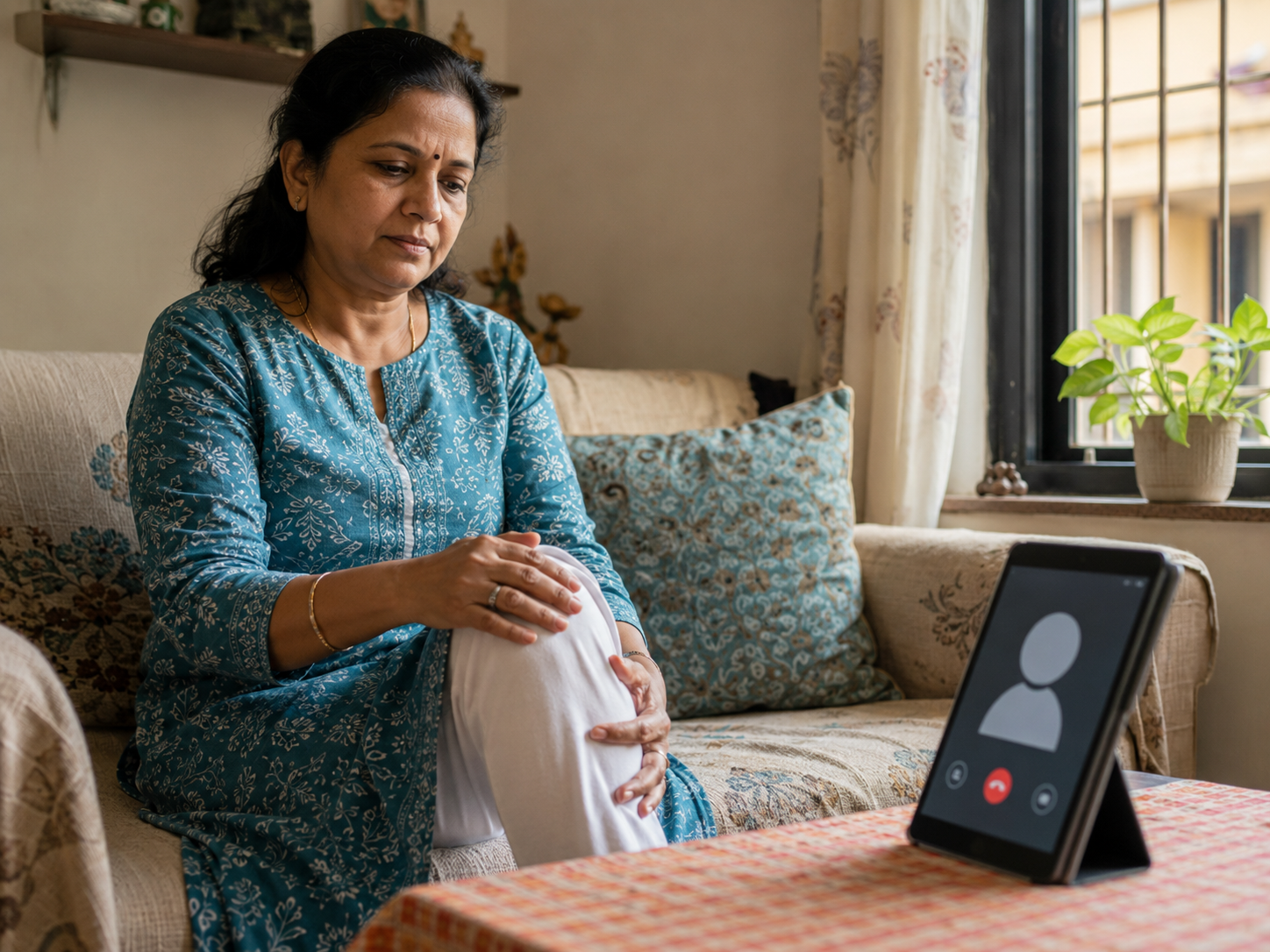
Knee and Joint Pain: When to See an Orthopedic Doctor Online
Direct answer: Persistent knee or joint pain is extremely common in India, and an online orthopedic consultation can be a practical first step for routine, non-emergency joint pain, arthritis follow-ups, and deciding whether you need in-person imaging or treatment. Sudden severe pain, an inability to bear weight, visible deformity, or an injury with swelling should be seen in person or at an emergency facility right away.
Key Takeaways
- Knee osteoarthritis affects an estimated 28.7% of adults in India, with rural prevalence as high as 34.6% in some community studies.
- An online consultation can help you understand whether your joint pain needs urgent in-person care, imaging, or can be managed with guidance and monitoring.
- Chronic joint pain, mild-to-moderate arthritis flare-ups, and post-treatment follow-ups are well suited to teleconsultation.
- Sudden injury, suspected fracture, severe swelling, or inability to walk need in-person or emergency evaluation.
- An orthopedic surgeon can help you plan next steps, including whether and when surgery should be considered.
At a Glance
- Intended audience: Indian patients with ongoing knee, hip, or joint pain considering online orthopedic consultation
- Location relevance: India, including Tier-2 and Tier-3 cities with limited access to specialist orthopedic care
- Reading time: 4 minutes
Jump to a Section
- Why joint pain is so common in India
- When an online orthopedic consultation helps
- When you should see a doctor in person
- What to expect from an online orthopedic consult
- Bottom line
- Sources
Why Joint Pain Is So Common in India
Knee osteoarthritis is one of the most common joint conditions among adults in India. Population-based research published in the Indian Journal of Orthopaedics estimates overall prevalence at close to 28.7%, with some rural community studies in South India reporting rates as high as 34.6%, and nearly two-thirds among older adults in certain rural populations.
Risk factors commonly associated with knee osteoarthritis in India include older age, female gender, obesity, sedentary work, and floor-level activities such as squatting, which put additional load on the knee joint.
When an Online Orthopedic Consultation Helps
Not every joint problem needs a clinic visit to get started. An online consultation with an orthopedic surgeon can be a useful first step for:
- Ongoing knee, hip, shoulder, or back pain without a recent injury
- Mild-to-moderate arthritis symptoms and flare-ups
- Understanding existing X-ray or scan reports you already have
- Follow-up after a previous consultation, injection, or physiotherapy course
- Getting guidance on whether your symptoms warrant in-person examination, imaging, or a specialist referral
This matters most for patients in Tier-2 and Tier-3 cities, where access to a specialist orthopedic surgeon may mean significant travel. A teleconsultation lets you get an initial, informed opinion before deciding on next steps. If your concern fits a more specific pattern, our guides on online consultation for arthritis and online consultation for sports injuries go into more detail.
When You Should See a Doctor in Person
Online consultation is not a substitute for emergency or hands-on orthopedic care. Seek in-person or emergency evaluation if you have:
- A recent fall or injury with sudden, severe pain
- Visible deformity or inability to bear weight on the joint
- Significant swelling, redness, or warmth around a joint, which can indicate infection
- Numbness, tingling, or loss of movement
Medical safety note: If you have any of the symptoms above, please seek immediate in-person medical attention rather than waiting for an online consultation.
What to Expect from an Online Orthopedic Consult
A typical online orthopedic consultation involves discussing your symptoms, history, and any existing reports or imaging, followed by guidance on next steps. This might include a home exercise plan, medication guidance, a referral for imaging, or a recommendation to plan an in-person visit for a physical examination.
For patients already considering more advanced treatment, such as joint replacement, an online consultation can also be a useful starting point for a second opinion before surgery — particularly when comparing surgical approaches such as robotic-assisted knee replacement.
If you’re weighing whether teleconsultation or an in-person visit is the right starting point in general, our guide on teleconsultation vs. in-person visits walks through that decision in more detail.
Bottom Line
Joint pain is common, and for many Indian patients it builds up gradually rather than starting with an emergency. That makes it a reasonable condition to start managing through an online consultation — as long as you know the warning signs that mean you should be seen in person instead. If your joint pain is persistent but not severe or sudden, book an online orthopedic consultation with AskyDoc to get guidance on your next step.
Sources
Latest Posts
-

-
Kidney Health in India: When to See a Nephrologist
July 31, 2026
-
Cancer Care in Madurai: Your Oncology Options Explained
July 31, 2026
-

Online Doctor Consultation in Madurai: A Complete Guide
July 31, 2026
-
Second Opinion Before Knee Replacement Surgery Online
July 29, 2026