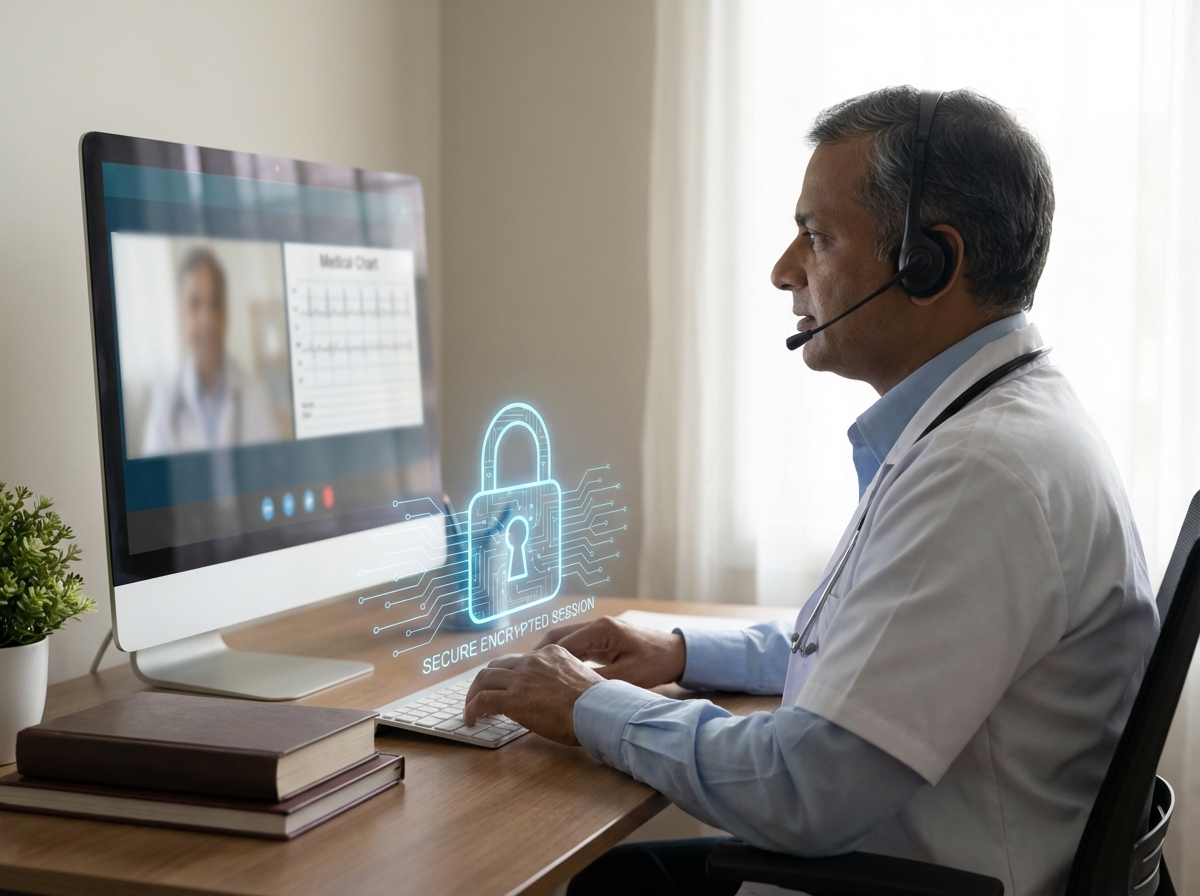
Learn how Indian patients can protect health data during teleconsultations with trusted platforms, safe internet habits, consent awareness, and secure care.
Protecting Patient Data in Teleconsultations: Privacy and Security Tips for Safer Digital Care
Direct answer: Patient data in teleconsultations is safer when people use trusted telemedicine platforms, secure internet connections, and clear consent processes. In India, both patients and healthcare providers share responsibility for keeping health information private, confidential, and secure.
Key Takeaways
- Use trusted telemedicine platforms linked to recognized healthcare services.
- Avoid public Wi-Fi and use a private internet connection for online doctor consultations.
- Understand informed consent, confidentiality, and how your health data may be stored or used.
- Doctors and platforms should use secure storage, controlled access, and clear privacy policies.
- Digital literacy matters because many privacy risks come from unsafe usage, not just weak software.
What patient data protection means in teleconsultations
Teleconsultation means a remote medical consultation using digital tools such as video, audio, chat, or app-based systems. During these sessions, patients may share highly sensitive health information including prescriptions, test reports, medical history, mental health details, medications, family history, and identity documents.
Protecting this information means keeping it confidential and limiting access to authorized people only. In digital healthcare, privacy and security are part of quality care, not just technical add-ons.
Why patient data protection matters in teleconsultations
If health information is exposed, it can create serious privacy risks. Patients may also hold back important details if they do not trust the system, which can affect diagnosis and treatment.
Trust is central to healthcare. That is why telemedicine platforms increasingly use encryption, secure logins, protected cloud storage, and monitored access systems to help keep records confidential.
In simple terms, your health data should be treated with the same care as records in a locked hospital file room, except the protection now has to work digitally.
Privacy and security tips for safer teleconsultations
1. Use trusted and approved telemedicine platforms
Not every video calling or chat app is suitable for medical use. In India, telemedicine providers are expected to use reliable systems that support confidentiality and proper record-keeping.
Before booking, verify that the platform is authentic, professional, and linked to a recognized healthcare service. You may also review the platform’s telemedicine platform safety standards.
- Check the website or app name carefully before logging in.
- Use official download links only.
- Avoid sharing reports over random messaging groups or unknown numbers.
- Confirm doctor identity and clinic details before the session.
2. Avoid risky internet habits during online doctor consultations
A secure platform cannot fully protect a consultation if the user joins through an unsafe network. Public Wi-Fi at cafes, railway stations, or malls may expose personal data to cyber risks.
Even a casual online consultation should be done from a private internet connection whenever possible.
- Use a private home or mobile data network.
- Keep your phone and apps updated.
- Set strong passwords and do not reuse them everywhere.
- Log out after consultations, especially on shared devices.
3. Understand consent and confidentiality in telemedicine
India’s telemedicine guidelines place strong emphasis on informed consent and confidentiality. Patients should understand when they are entering a teleconsultation, what information is being collected, and how it may be stored or used.
Doctors are also expected to maintain digital records securely, just as they would protect physical files in a clinic.
This is especially relevant as health data now sits within a broader privacy discussion. New regulations, including the Digital Personal Data Protection framework, have increased awareness around how personal information should be handled.
Health data deserves extra caution because it is deeply personal and can have long-term consequences if misused. Patients may also benefit from reading more about patient consent in online consultations.
The hidden challenge: digital literacy and access gaps
Safety in teleconsultations is not only about software. It also depends on whether patients know how to use digital healthcare safely.
Some users may not know how to verify a genuine app, identify phishing messages, manage privacy settings, or recognize suspicious links. In India, this matters across cities, towns, and rural areas where digital access and secure usage skills can vary.
This gap can raise privacy risks, especially for elderly users or first-time digital health users. Healthcare providers can help by giving simple instructions before appointments, including how to join safely, where to upload reports, and what type of communication is official.
What doctors and telemedicine platforms must do
Patients should stay alert, but the larger responsibility still lies with healthcare providers and telemedicine platforms.
- Protect patient records with secure storage and controlled access.
- Follow Indian telemedicine rules on confidentiality.
- Maintain proper consultation records.
- Use systems that reduce the risk of unauthorized sharing or breaches.
- Communicate clearly about privacy policies and consent.
Security should never feel optional in digital care. It should be built into the patient experience from the first click.
Smart takeaway for patients using digital healthcare
Convenience is one of telemedicine’s biggest strengths, but safe digital care depends on everyday caution. Verify the app, protect your internet connection, and ask questions if something feels unclear.
A secure consultation is not only about technology. It is also about confidence, awareness, and trust.
If you want a safer and simpler way to connect with qualified doctors online, book your appointment with AskyDoc and take the next step toward secure digital healthcare with confidence.
Medical safety note: If you are unsure how your health information will be handled, ask the provider before sharing sensitive details. For personal medical advice, diagnosis, or treatment decisions, consult a qualified clinician.