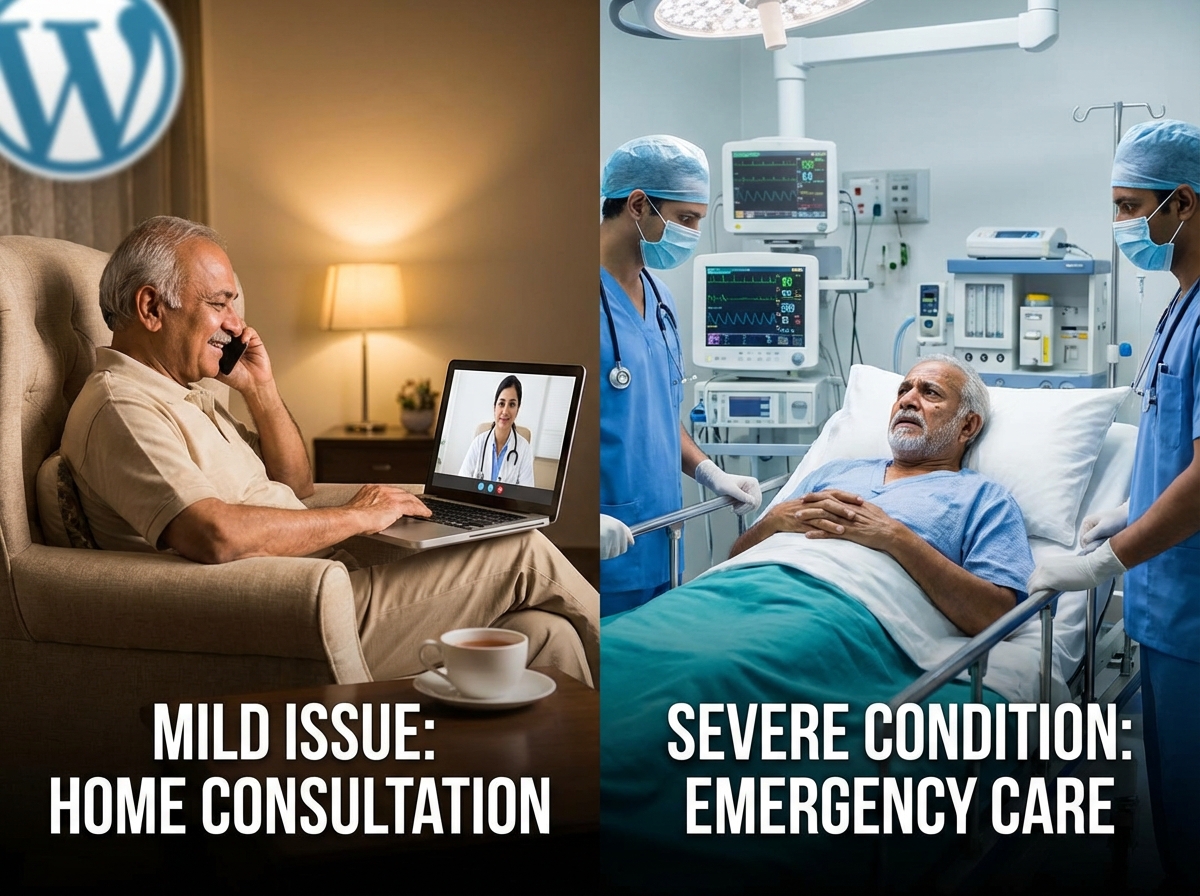
Teleconsultation vs in-person doctor visits guide
Learn when teleconsultation is suitable and when an in-person doctor visit is safer for symptoms, follow-ups, emergencies, and care in India.
Direct answer: Choose teleconsultation for mild symptoms, routine follow-ups, report reviews, and many mental health consultations. Choose an in-person doctor visit for emergencies, worsening symptoms, injuries, or any condition that may need a physical examination, tests, or procedures.
For patients in India, the safest choice depends on symptom severity, urgency, and whether a doctor needs to examine you directly.
Key takeaways
- Teleconsultation is often useful for mild symptoms, routine follow-ups, and lab report discussions.
- Virtual care can also support therapy, stress management, anxiety support, and psychiatric follow-up reviews.
- In-person care is usually safer for emergencies, serious injuries, severe bleeding, and stroke warning signs.
- Some symptoms may seem minor but still need a physical examination, such as severe abdominal pain or unusual swelling.
- If you are unsure, a teleconsultation may help guide your next step, but emergencies should go directly to a hospital or emergency department.
What teleconsultation means
Teleconsultation, also called an online doctor consultation or virtual consultation, means speaking with a doctor by phone or video instead of visiting a clinic or hospital in person.
It can be practical for Indian families managing work, school, travel, and elder care. But convenience should not replace safety when symptoms are urgent or need hands-on evaluation.
When teleconsultation makes sense
Teleconsultation works best when a doctor can understand your condition through symptoms, medical history, and visual review without needing a direct physical examination.
Routine follow-ups and ongoing health management
If you already have a diagnosis and need medication review, progress tracking, or lifestyle guidance, online consultations are often appropriate.
This may be useful for:
- Diabetes and blood pressure follow-ups
- Thyroid medication adjustments
- Repeat prescriptions where appropriate
- Lab report discussions
These situations often depend more on your medical history and reports than on a physical examination.
Minor illnesses and simple symptoms that can be reviewed online
Many common day-to-day health concerns can be discussed online first.
- Cold, cough, mild fever, or sore throat
- Skin rashes, itching, or acne flare-ups
- Digestive discomfort such as acidity or mild constipation
- Headache or seasonal allergies
Teleconsultation may help you understand whether home care is enough or whether you should visit a clinic later.
Mental health support through virtual consultation
One of the strongest use cases for virtual care is mental health consultation. Therapy sessions, stress management, anxiety support, and follow-up psychiatric reviews can often be handled effectively online.
This may improve access for people who feel hesitant about visiting a hospital or clinic in person.
When an in-person doctor visit is the better choice
Online care has limits. A doctor on video cannot check your abdomen, listen to your chest directly, stitch a wound, or provide emergency treatment.
Emergencies need immediate physical care
If you or a loved one has any of the following symptoms, go to the nearest hospital or emergency department immediately:
- Chest pain
- Trouble breathing
- Severe bleeding
- Fainting or seizures
- Serious injuries or suspected fractures
- Signs of stroke such as facial drooping, slurred speech, or weakness
Telemedicine is not suitable for emergencies.
Symptoms that may need a physical examination
Some symptoms may sound mild but still need a doctor to examine you in person.
This may include severe abdominal pain, high fever that is not improving, ear pain, unusual swelling, or a persistent condition that keeps returning.
When tests, procedures, or urgent intervention may be needed
If a doctor suspects you may need blood tests, scans, wound care, injections, or any urgent intervention, an in-person visit is the next step.
Teleconsultation can guide you, but it cannot replace procedures.
Quick comparison
| Situation | Better first choice | Why |
|---|---|---|
| Routine follow-up after diagnosis | Teleconsultation | Often depends on history, progress, and reports |
| Mild cold, cough, rash, or acidity | Teleconsultation | Can help decide home care versus clinic care |
| Mental health therapy or follow-up review | Teleconsultation | Often manageable effectively online |
| Chest pain, trouble breathing, severe bleeding | In-person visit | Needs immediate emergency evaluation |
| Severe abdominal pain or unusual swelling | In-person visit | May require physical examination |
| Need for scans, injections, wound care, or tests | In-person visit | Procedures cannot be done online |
A simple rule to decide
- Choose teleconsultation for mild symptoms, follow-ups, report reviews, and mental health sessions.
- Choose in-person visits for serious symptoms, worsening conditions, injuries, or when a physical examination is clearly required.
- If you are unsure, a teleconsultation may help you get quick medical direction.
- If symptoms are alarming, do not delay offline care.
Safety note: Consult a qualified clinician for medical advice. For emergency symptoms, seek immediate in-person care.
What this means for patients in India
For people across India, the best healthcare choice is not online versus offline. It is knowing when to use each one wisely.
Teleconsultation offers speed, access, and convenience. In-person care offers examination, procedures, and emergency support. Both have value, but they are not interchangeable.
If you want quick guidance for a mild health issue, follow-up support, or expert advice without the travel hassle, book a consultation with AskyDoc. If your symptoms suggest something more serious, let that consultation be the first step toward timely physical care.