AI in India telemedicine: faster online consultations
AI supports telemedicine in India with faster triage, multilingual help, and smoother follow-ups—while doctors remain responsible for decisions.
Direct answer: In India, Artificial Intelligence (AI) in telemedicine is mainly used to support online doctor consultations by speeding up triage, improving communication (including local-language support), and making follow-ups more consistent—while doctors still make the final clinical decisions.
Why AI is being used in telemedicine in India
If you have ever tried a teleconsultation and thought, “Why does it still feel slow sometimes?”, you are not alone. A major shift in Indian healthcare is unfolding: Artificial Intelligence (AI) in telemedicine.
AI is generally designed to support clinicians so teleconsultations can be more responsive and patient-friendly.
From basic symptom guidance to multilingual support, AI tools (including chatbot-style assistants) are increasingly used behind the scenes. In India, this can help scale access through better triage, faster follow-ups, and language support.
How AI helps telemedicine in India today
AI chatbots for quick answers and appointment support
AI-powered chatbots can help with early steps, such as answering basic health questions, guiding patients on what type of specialist to consult, and assisting with appointment scheduling.
This may reduce waiting time and help platforms manage higher volumes while maintaining responsiveness. For patients, it can mean fewer confusing steps and more clarity even before meeting the doctor.
Local-language prescription support for Indian patients
India’s telemedicine ecosystem shows how impactful AI can be at public-health scale. For example, eSanjeevani has been reported to use AI features to generate prescriptions in multiple local languages.
This may help patients understand instructions more clearly. When advice is easier to read, adherence and follow-ups can become smoother.
Documentation and clinical workflow support during teleconsultations
Documentation can take significant time in healthcare. AI can support doctors by organising patient-reported symptoms, structuring notes, and highlighting relevant medical history during teleconsultations.
The doctor remains in control, while routine workflow steps may become faster and more consistent.
What may come next in AI-enabled teleconsultations
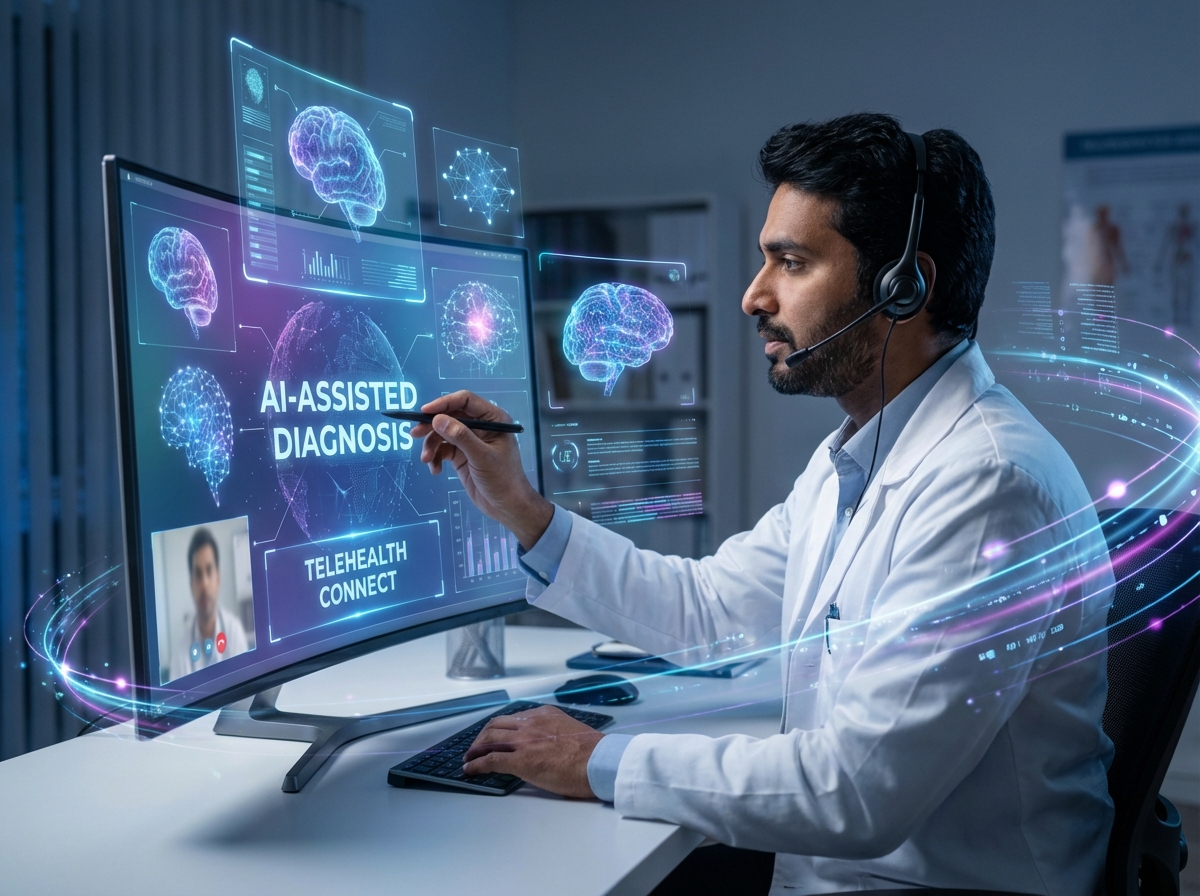
AI-assisted symptom analysis and risk flagging for faster triage
As tools mature, AI systems may combine symptoms, medical history, and available vitals to help clinicians spot patterns quickly.
For instance, an assistant could flag warning signs (such as severe breathlessness, chest pain red flags, or potential medication interaction risks) so urgent cases can be prioritised.
This does not mean AI diagnoses you on its own. It can provide decision support, while the doctor evaluates context and confirms next steps.
Personalised reminders for medicines and follow-ups
A common reason treatments do not work as expected is missed doses or skipped follow-ups. AI can help by sending personalised reminders, such as:
- Medication schedules (including time-based nudges)
- Follow-up reminders after a few days to check progress
- Lifestyle prompts like hydration, diet notes, or symptom monitoring
For busy Indian households balancing work, children, and elders, this kind of support can be practical and reassuring.
Better continuity of care across multiple online doctor visits
Telemedicine often becomes more valuable when care is continuous rather than one-off. AI can help create a consistent health timeline by summarising previous consultations, spotting recurring issues, and reminding both doctor and patient what helped (or did not) last time.
Over time, this may support more personalised care for long-term concerns such as diabetes, thyroid conditions, certain skin conditions, or recurrent infections.
What AI won’t replace: the doctor’s judgment
Even with rapid progress, healthcare still needs human expertise for nuanced decisions, physical assessments (when needed), ethical judgment, and empathy.
A useful way to think about it is: AI assists, doctors decide. AI can reduce noise, speed up routine steps, and surface relevant insights, while the clinician remains responsible for diagnosis and the care plan.
Practical takeaway for India: choosing AI-enhanced telemedicine
The future of teleconsultations in India may be more efficient and patient-friendly: faster triage, clearer instructions in local languages, smarter follow-ups, and better continuity.
A practical takeaway is to choose platforms that already help simplify online care and support early action when symptoms arise.
If you want quick guidance with a doctor-led consultation that fits your schedule, you can book an appointment on AskyDoc and take the next step with confidence.