PCOS care in India via teleconsultations
Teleconsultations in India can support PCOS symptom review, testing guidance, and follow-ups with the right specialists—practical and private.
Direct answer: In India, teleconsultations can help you discuss possible PCOS symptoms, plan appropriate tests, and get follow-up support from specialists without travel or long waits.
Key takeaways
- PCOS (Polycystic Ovary Syndrome) can show up as irregular periods, acne, unwanted hair growth, weight changes, or fertility concerns.
- Teleconsultations can help connect symptoms, guide next steps, and make follow-ups easier to keep.
- PCOS care may involve a gynaecologist, endocrinologist, and dietician/nutritionist.
- Lifestyle habits are commonly discussed early, alongside tests or medicines when appropriate.
- Seek clinician advice for prolonged missed periods or unexpected bleeding; telehealth may still require in-person exams or tests.
Why are so many Indian women discussing PCOS online?
PCOS (Polycystic Ovary Syndrome) is increasingly recognised as a common concern for many young women in India.
Some studies and reports suggest around 1 in 5 may be affected in certain groups, and overall prevalence in India is often cited in the 11–22% range depending on the criteria used.
This helps explain why searches for irregular periods, acne, and weight gain have grown—and why teleconsultations are becoming a practical support option.
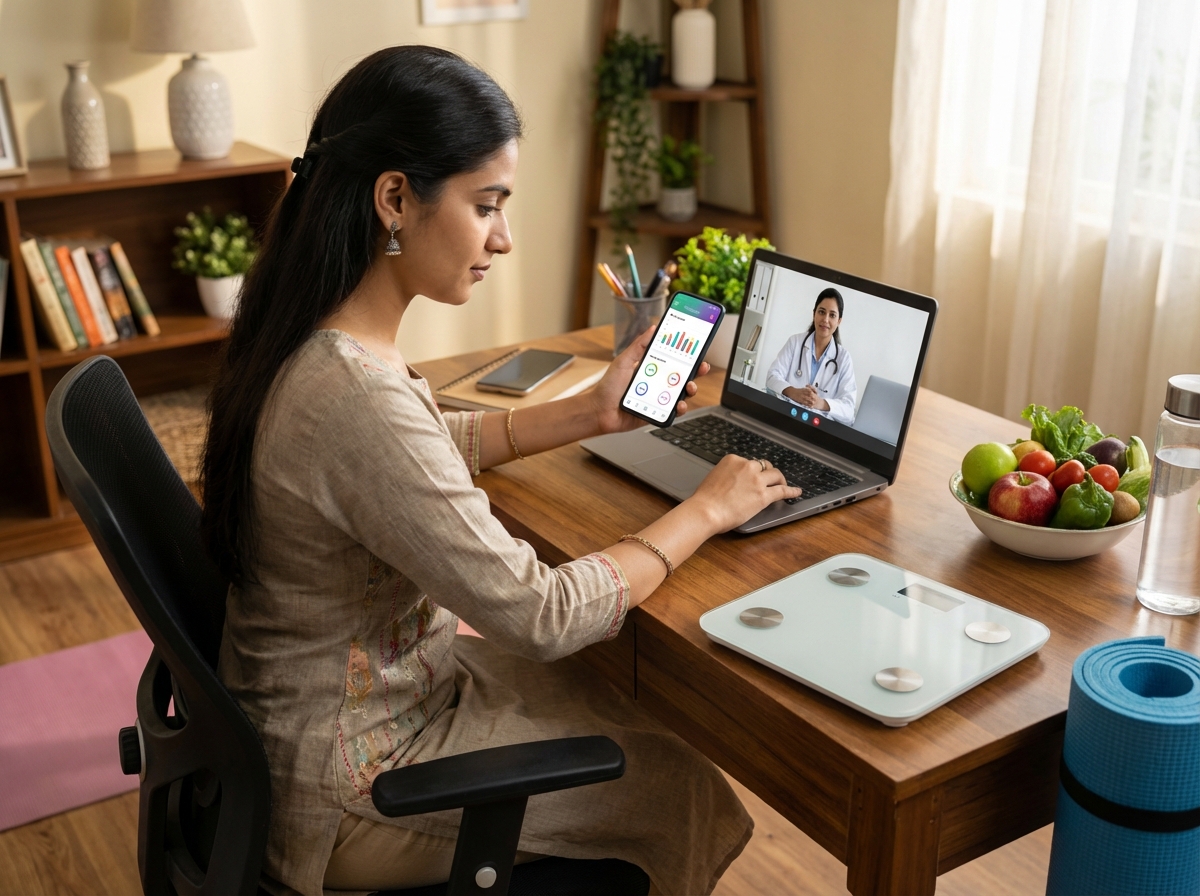
Instead of waiting months for appointments or travelling to bigger cities, you can discuss symptoms with an appropriate clinician from home. Privacy can matter too, especially when symptoms feel personal.
PCOS symptoms can be confusing: how teleconsultations help
PCOS does not look the same for everyone. Some people notice irregular periods, while others struggle more with acne or unwanted hair growth.
Some discover possible PCOS while planning a pregnancy.
Teleconsultations can help because you can discuss multiple symptoms in one conversation, clarify what might be related, and plan next steps without feeling rushed.
Common signs discussed in online doctor consultations for PCOS
- Irregular or missed periods (sometimes for months)
- Acne or oily skin that does not respond to basic care
- Hirsutism (excess facial/body hair)
- Weight gain or difficulty losing weight
- Fertility concerns or delayed conception
- Dark patches around the neck/underarms (can be associated with insulin resistance)
Many people find it easier to speak openly over video/audio—including about facial hair, libido, or fertility worries—because it can feel less intimidating than an in-clinic conversation.
PCOS often needs multiple specialists—telemedicine can help
PCOS is not only a “period problem.” It may involve hormonal patterns, metabolic factors (such as insulin resistance), and lifestyle contributors.
For many people, supportive care works best when it is personalised and monitored over time.
Which specialists may be involved in PCOS care?
- Gynaecologist: cycle concerns, ultrasound guidance, bleeding issues, fertility planning
- Endocrinologist: insulin resistance evaluation, thyroid overlap, metabolic risk review
- Dietician/Nutritionist: sustainable meal planning, weight support, cravings, meal timing
Teleconsultations can help you reach these specialists even if your town does not have a combined setup. Follow-ups may also be easier to manage without taking leave from work or college, which can support consistency.
What doctors typically recommend first for PCOS
One advantage of telemedicine is that clinicians can explain day-to-day steps clearly—often using simple trackers, meal templates, and realistic movement goals.
For many people, lifestyle changes are commonly recommended as a first-line approach, alongside investigations or medicines when appropriate.
Over time, steady habits may support improvements in cycle regularity, skin changes, and energy levels for some people, though responses can vary.
Actionable lifestyle habits often advised in PCOS care
- Move about 30 minutes daily: brisk walking, cycling, dance, or strength training
- Reduce sugary foods and refined carbs: especially sweet drinks and frequent desserts
- Prioritise protein + fibre: may help manage cravings and support metabolic health
- Sleep and stress support: late nights and ongoing stress can worsen symptoms for some people
When to seek medical advice sooner
Teleconsults can help when something feels urgent—for example, prolonged missed periods or unexpected bleeding.
A clinician can advise whether you need an in-person exam, prescribe medicines when appropriate, and recommend tests (such as blood work or ultrasound) to avoid delays.
How telehealth is changing PCOS support in India
During COVID, many women who noticed symptoms for the first time turned to online doctors, and a number were assessed for PCOS through teleconsultations.
Beyond clinical visits, there is also a growing online ecosystem—webinars and support communities—that helps people learn what to ask and when to seek care.
This matters because stigma can still be a barrier. Teleconsultations may reduce friction and help people discuss concerns sooner, whether the issue is acne, hair growth, irregular bleeding, or fertility.
What to do next: get a plan you can actually follow
If your periods are unpredictable, you are dealing with acne or unwanted hair growth, or you suspect PCOS, it may help to get checked rather than waiting for it to “settle.”
Earlier evaluation can support long-term metabolic health monitoring and fertility planning when relevant.
A practical next step is a structured plan: symptom review, appropriate tests, and follow-ups that fit your schedule.
Book a teleconsultation on AskyDoc to speak to a gynaecologist and, if needed, connect with a dietician/nutritionist or endocrinologist—from home. Consistent follow-up often makes day-to-day management easier.